
AI-Empowered Interview Coach
Background
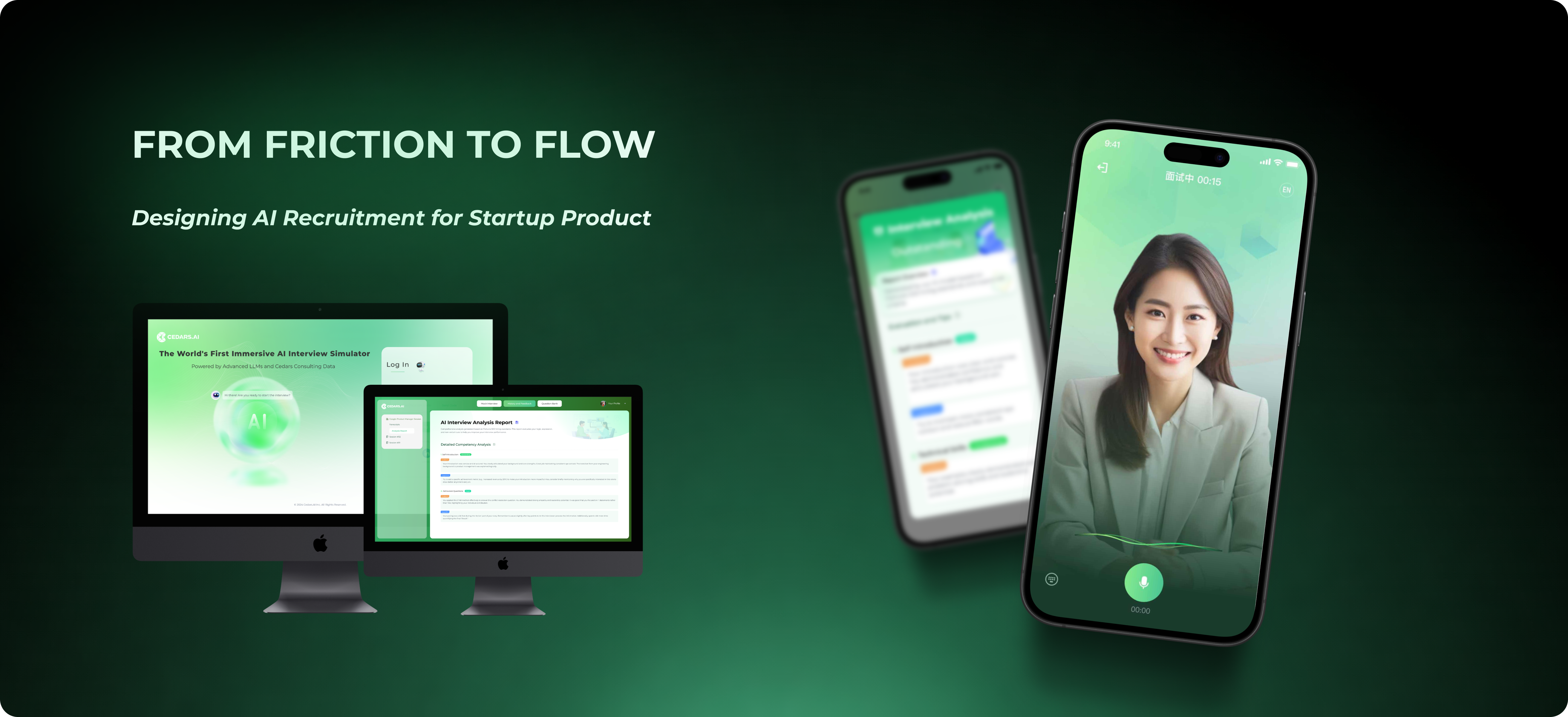
Cedars.AI was founded to solve a clear problem: 1-on-1 career coaching is too expensive for most students. Our mission was to build an accessible, AI-powered coach that allows students to practice interviews anytime, anywhere, replacing the need for expensive human mentors.
The Hypothesis
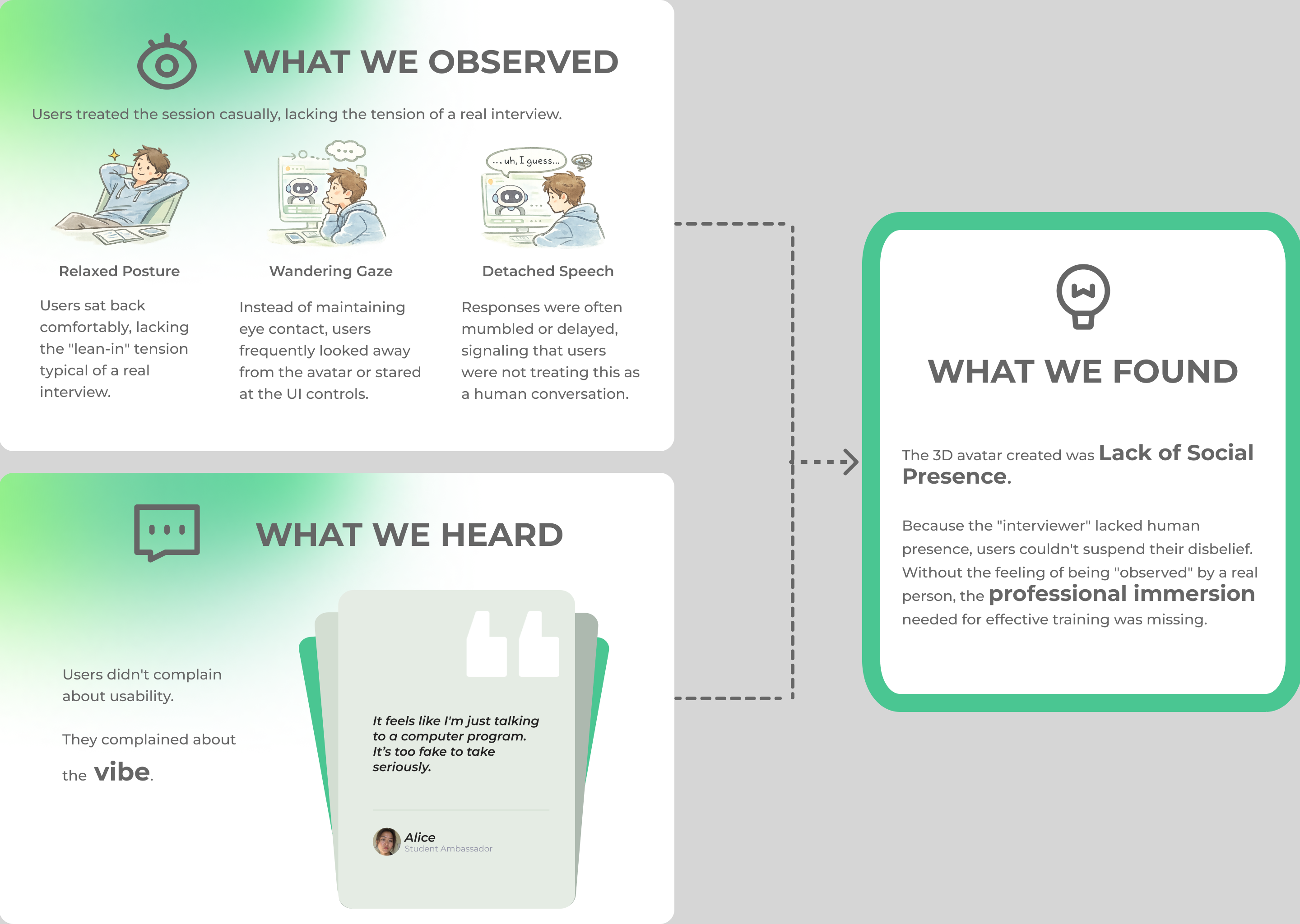
To make the AI feel approachable and less intimidating for students, our initial MVP concept featured a 3D Robot Avatar. We assumed that a "cool“, high-tech visual identity aesthetic would encourage users to practice more often without the fear of judgment.
Discovery: Triangulating the Problem
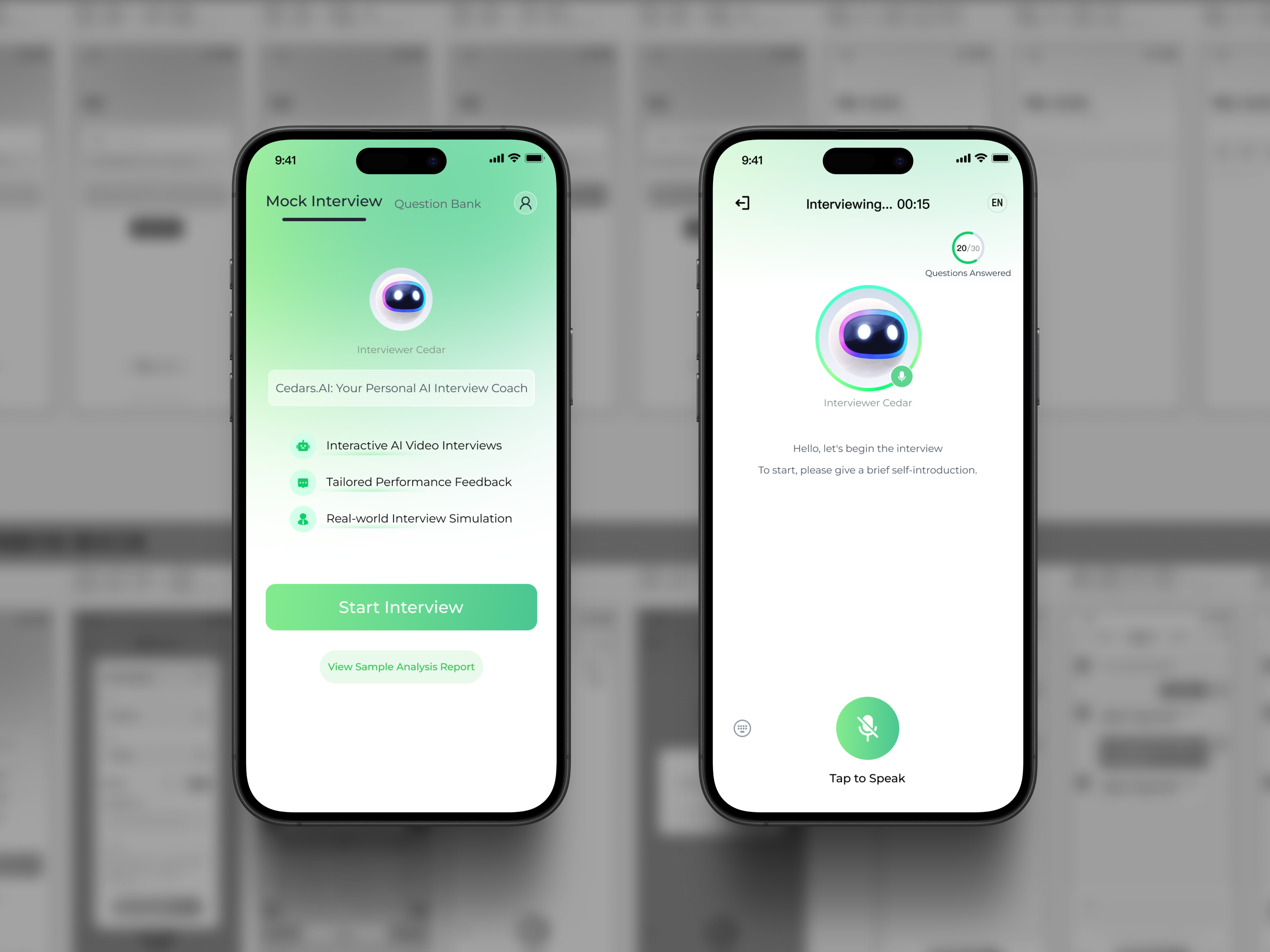
To validate the MVP's performance, I conducted qualitative sessions through our Student Ambassador network. By combining Behavioral Observation with Verbal Feedback, a clear pattern of Psychological Disconnect was found.
Ideation: Finding the Sweet Spot between Realism and Speed
To solve this problem, I explored three levels of fidelity to find the right balance between immersion and performance.

Option 1: The Stylized 3D Avatar
- The Idea: Use a friendly, high-fidelity 3D character designed to be approachable.I developed a comprehensive redesign that focused on improving the user experience and increasing engagement.
- The Verdict (Rejected): Too casual.While visually appealing, it felt more like a social media profile than a professional interviewer. The psychological barrier remained. Users couldn't feel the "social pressure" necessary for serious practice.
Option 2: Live AI Video
- The Idea: Use real-time AI generation to make a human face talk and move.
- The Verdict (Rejected): Unfeasible and too slow.Feasibility testing revealed a 3-second lag and awkward lip-syncing. This technical friction broke the conversation flow, distracting users from their own speech. What's more, there was also engineering constraint. After syncing with the dev team, we confirmed that building a low-latency solution was beyond our current technical resources.
Option 3: High-quality static photography of a real professional.
- The Idea: High-quality static photography of a real professional.
- The Verdict (Selected): Just right. It offers the Trust of a real human face with the Zero Latency of a static image.
High-Fidelity Design
Seamless Interview Experience
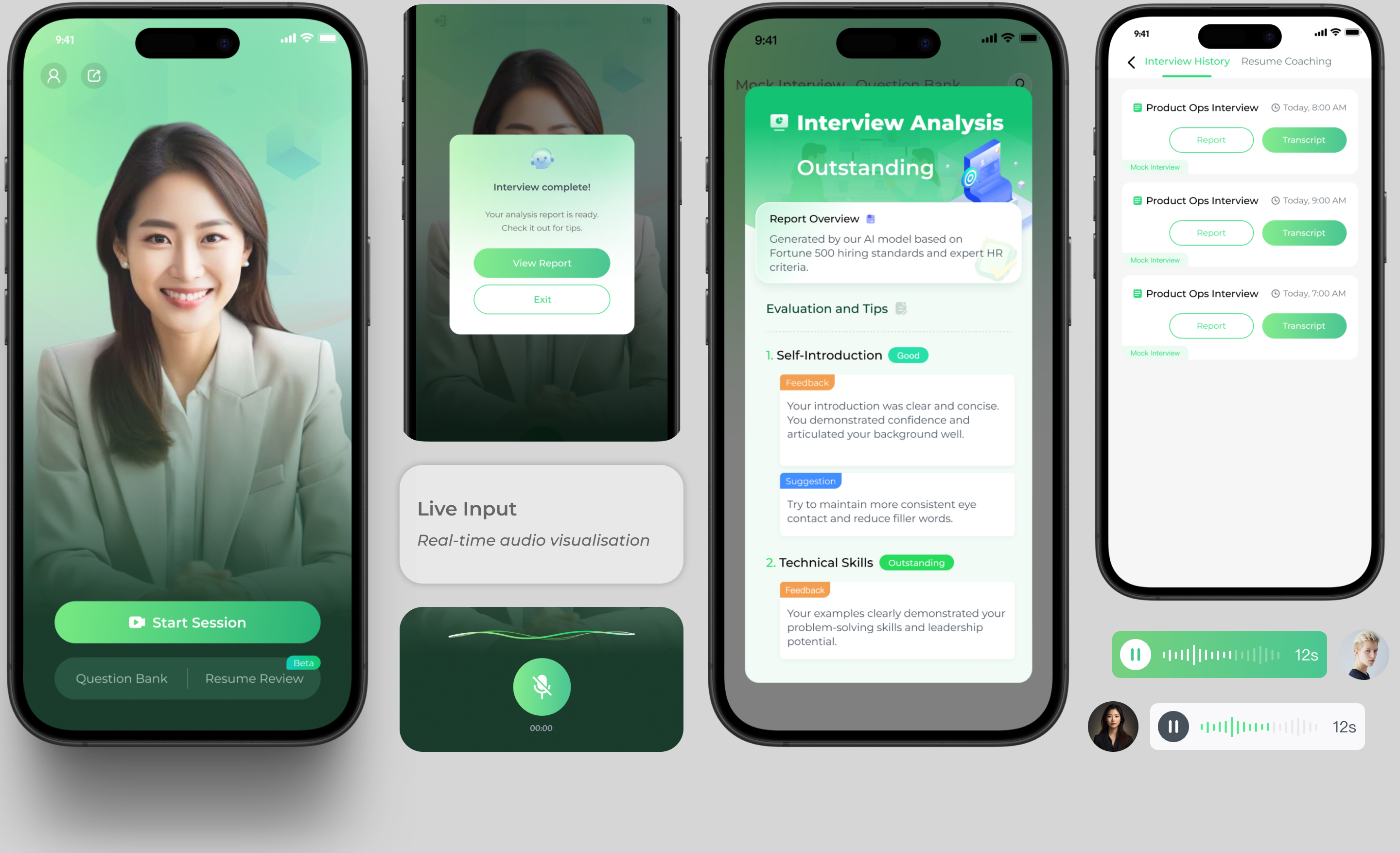
From the live video simulation to the final score report. Users can practice with an AI interviewer, get instant feedback on their performance, and play back their answers to catch mistakes. Everything happens in one smooth flow.
Cross-Platform Interface System
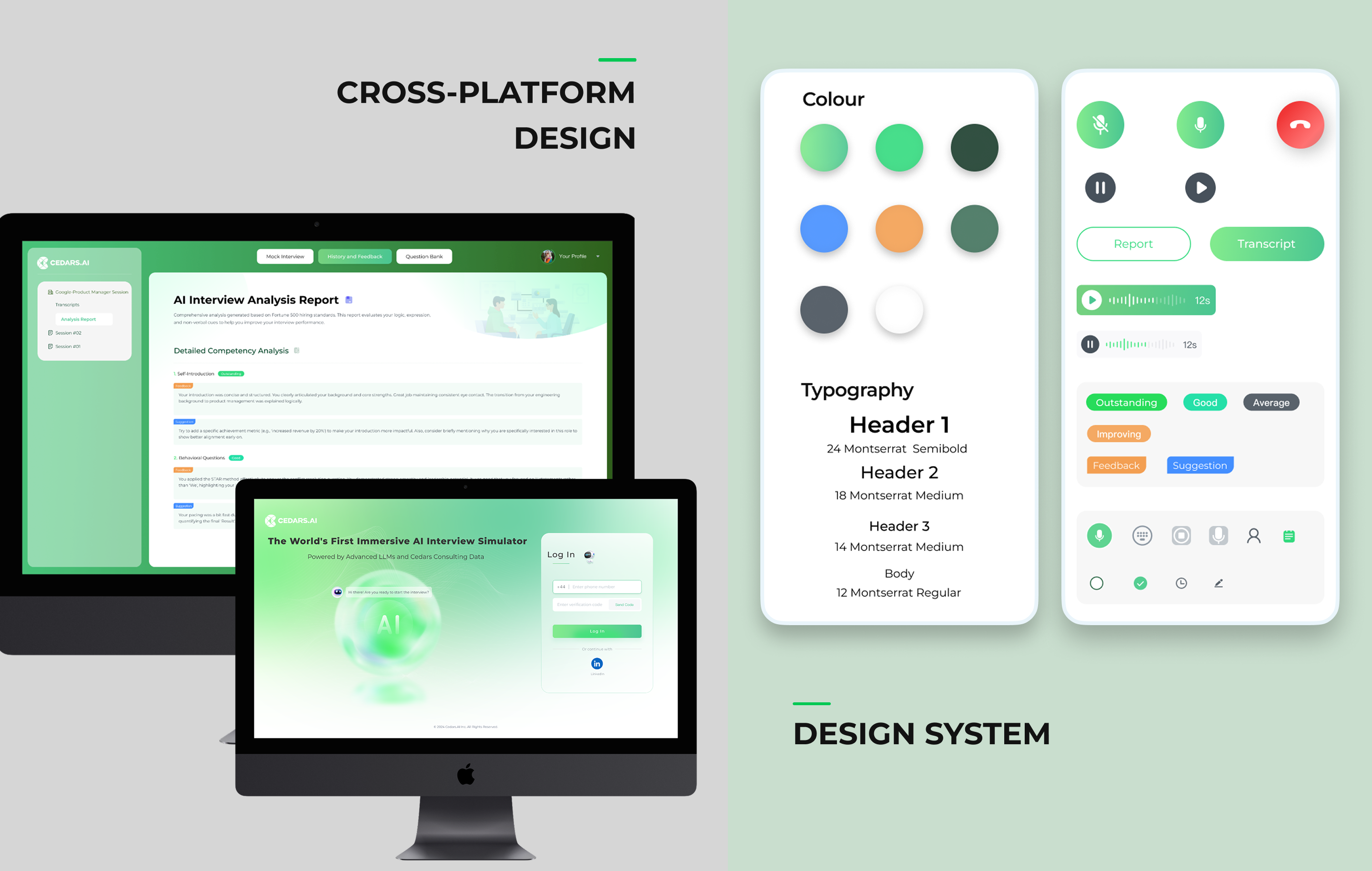
Scaling the Experience for Professional Productivity: While the mobile experience focuses on accessibility and on-the-go practice, the desktop interface is for deep-dive analysis. By expanding the canvas to a dashboard-style layout, I optimized the information density of the AI Interview Analysis Report, allowing users to review complex competency data with maximum clarity and precision.
A Scalable Visual Foundation: To maintain brand integrity across all touchpoints, the design system was designed in a high-contrast "Aurora Green" palette. From standardized status labels to interactive audio components, every element is built for scalability, ensuring a cohesive and professional user experience.
Closing the AI Feedback Loop
I designed a seamless feedback system to bridge the gap between AI processing and user review. By combining transparent loading states with interactive feedback processes, I transformed the technical complexity of AI into a clear, empowering, and trust-centered coaching experience.
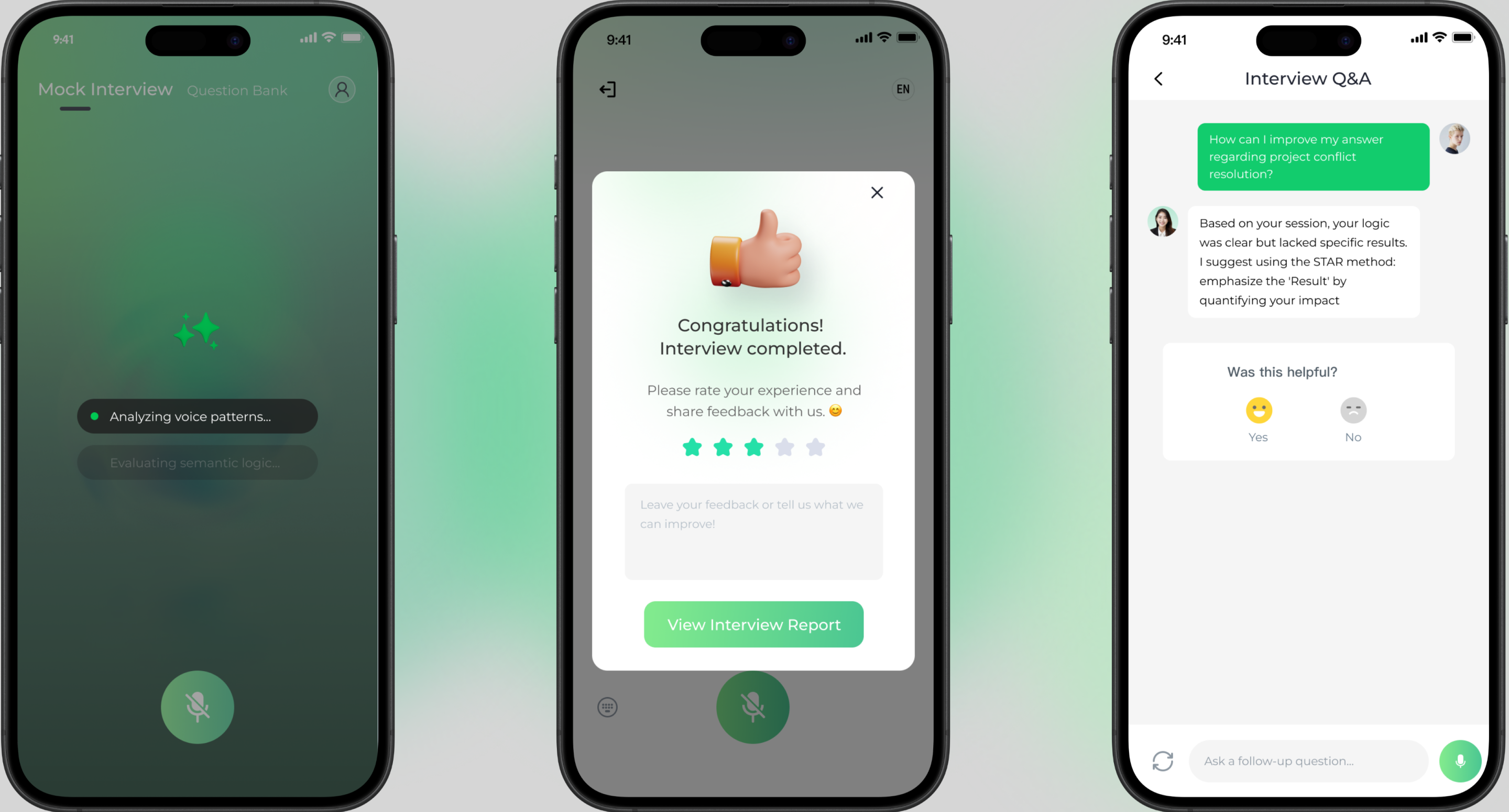
- Status, Not Just Loading: I replaced the static loading spinner with real-time status updates. Showing users exactly what the AI is 'thinking'—like analyzing voice or logic—reduces anxiety and builds trust.
- Overall Experience Rating: At the end of each session, users provide a high-level rating. This helps us measure the overall success of the interview and identify broad areas for system improvement.
- Contextual Feedback: Within the analysis report, users can give instant feedback on specific AI suggestions. This granular data allows the model to refine its coaching logic based on user agreement and relevance.
Growth Strategy
To balance user value with business goals, we designed a conversion-focused ecosystem. By optimizing the subscription funnel and social referral loops, a sustainable path was created for both revenue growth and organic user acquisition.
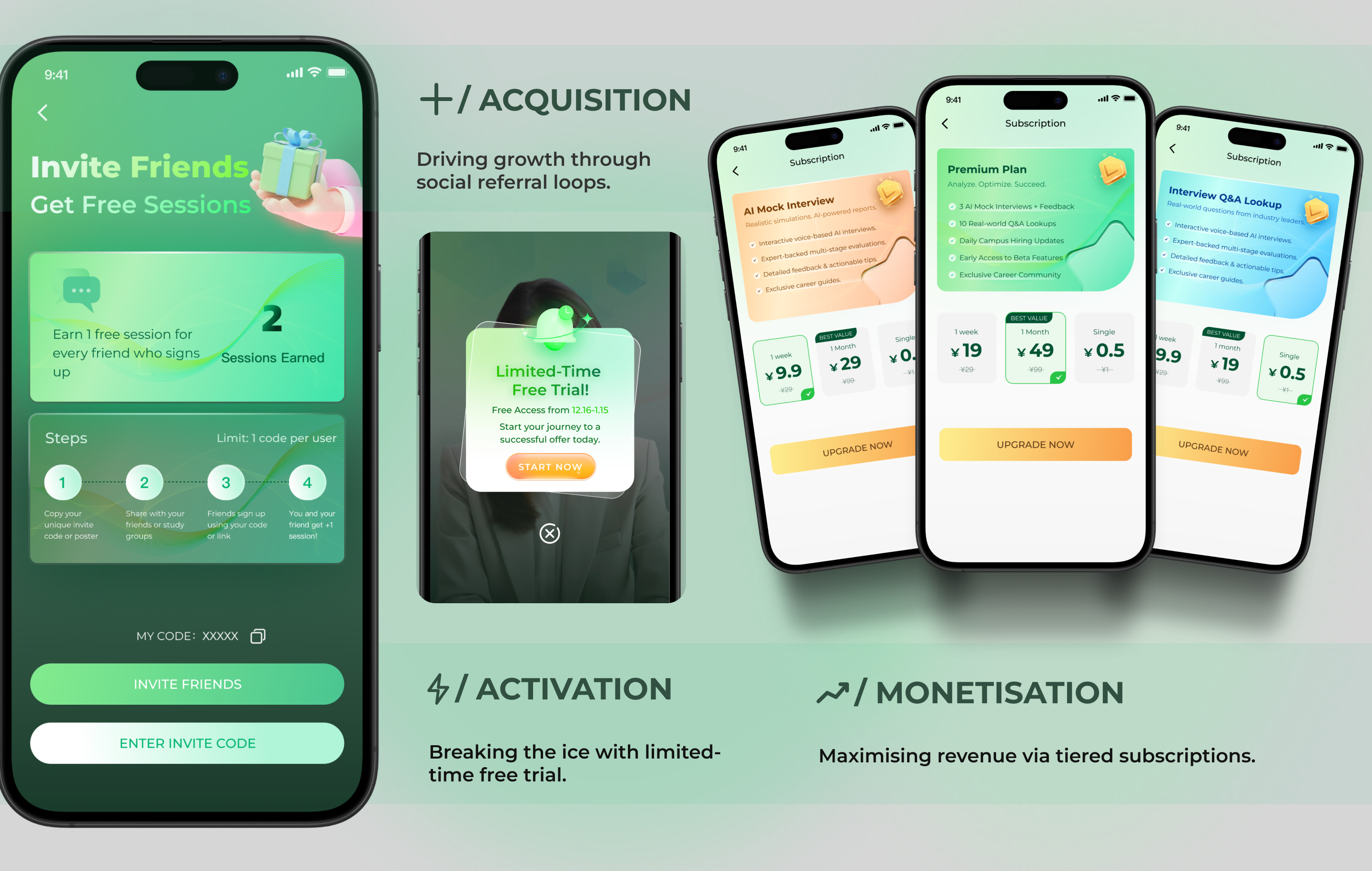
- Acquisition: I built a bidirectional referral loop that incentivizes users to grow the community organically. By rewarding social advocacy, we effectively reduce acquisition costs while reaching highly targeted audiences.
- Activation: I used limited-time trials to create urgency and eliminate initial hesitation. This low-friction entry point quickly converts passive visitors into active participants within the AI core loop.
- Monetisation: The tiered subscription model—Weekly, Monthly, and Single—is tailored to different user life cycles. This flexibility ensures that every user segment finds a relevant value proposition, maximizing overall revenue growth.
Outcome and Reflection
Outcome
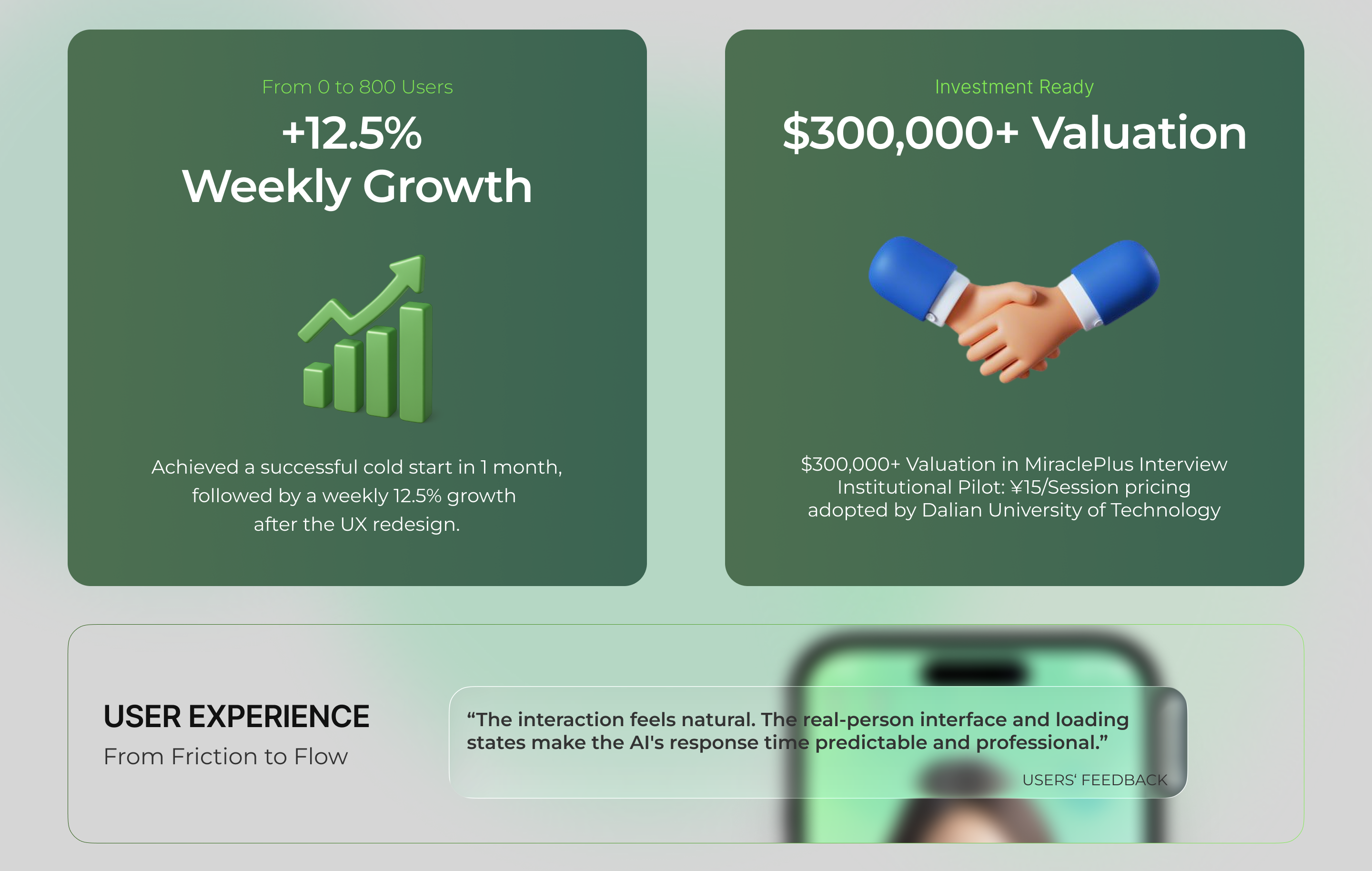
Through three months of agile iterations, I transformed a high-churn MVP into a commercially viable solution driving 12.5% weekly growth and evaluating $300,000 in investment interest. This journey shows that UI design in the startup phase is far more than a decorative tool, it is a strategic engine for growth and monetisation.
Rapid Growth
Achieved a rapid 0-to-800 organic cold start within the first 10 days. Post-redesign optimizations targeted at core interaction friction resulted in a sustained 12.5% weekly growth surge, validating the product-market fit.
Activation
I used limited-time trials to create urgency and eliminate initial hesitation. This low-friction entry point quickly converts passive visitors into active participants within the AI core loop.
User Experience
Elevated the immersive interview experience through real-person interface. By ensuring the flow is smooth and predictable, the whole experience became "professional and seamless."
Reflection
Designing AI Production is about Building Trust
Early user mentioned:"I was cut off mid-sentence" as feedback. I realized the problem wasn't only technical latency, but also a lack of control. So designing to make the interface feel safe is important. By adding a real-person interface and phased loading states, I gave users a clear mental map of what the AI was doing.
Trade-offs between Performance and Immersion
We faced a critical choice between using live video or static images for the interviewer. While video offered maximum realism, it caused technical latency that broke the user’s flow. I ultimately opted for high-fidelity images, achieving 80% of the immersion at low technical cost. This taught me that UX isn't about using the "best" technology, but about finding the balance between performance and perception.
Balances between Business Goals and User Experience
In a fast-paced startup, there’s a constant tension between the founder’s need for monetisation and the user’s need for a distraction-free experience. It's important to integrate commercial touchpoints into natural transition. This allowed the product to remain commercially viable without sacrificing the professional, immersive atmosphere. I learned that a designer’s true role is to mediate between business survival and user focus.